October 4, 2025
Building an FFmpeg Pipeline for LLM Video Benchmarks
article.mdx
Context
When evaluating LLMs on video tasks, the benchmark fails if preprocessing is inconsistent. I use FFmpeg as a deterministic ingestion layer so model comparisons are fair.
Core idea
Every model should receive the same normalized input:
- same resolution
- same frame rate
- same audio format
- same clip boundaries
Without this, benchmark results mix model quality with preprocessing noise.
Benchmark UI snapshot
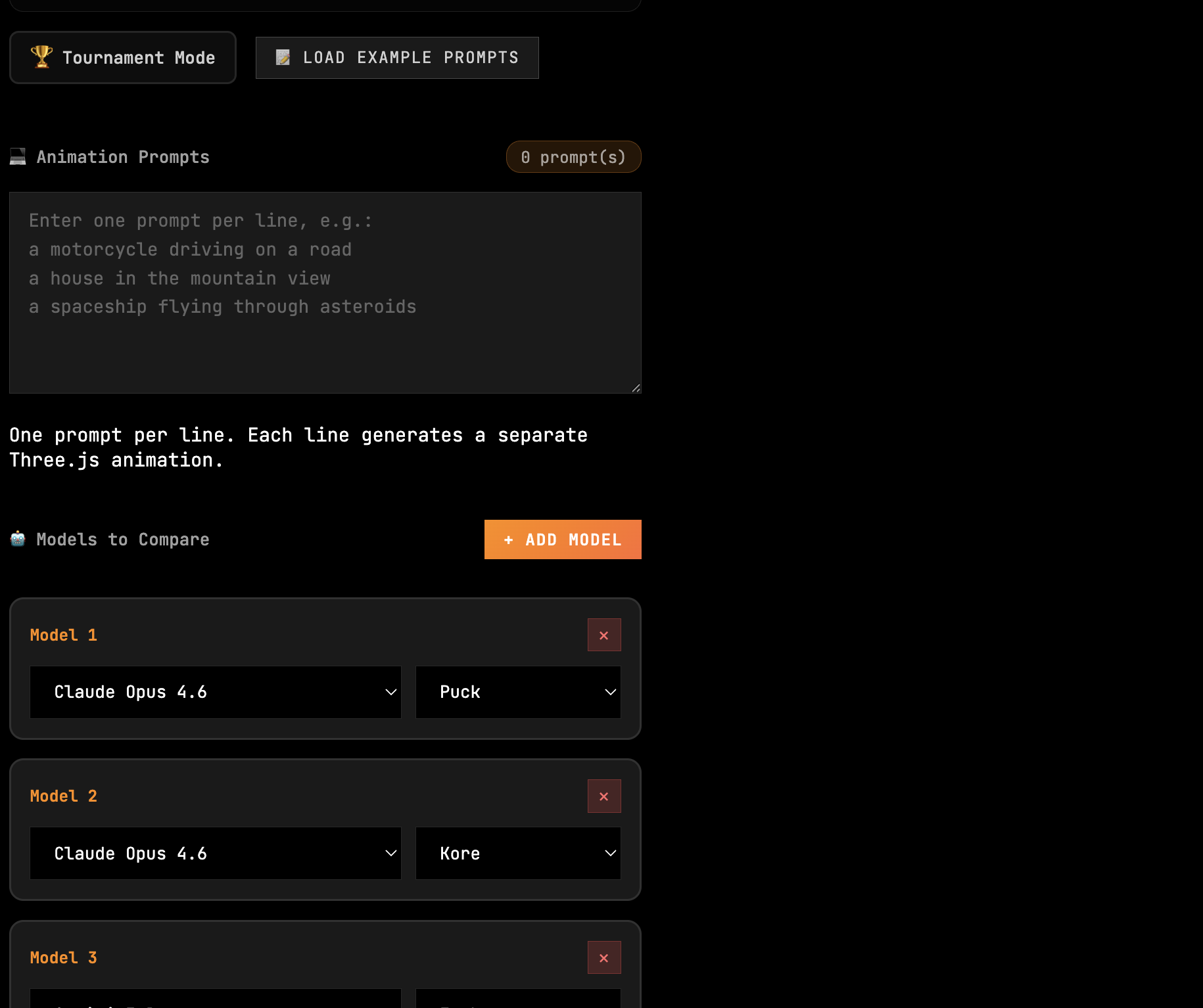
Screenshot from my benchmark setup UI used to compare prompts and model outputs.
Baseline FFmpeg normalization
ffmpeg -i input.mp4 \
-vf "scale=1280:720:force_original_aspect_ratio=decrease,fps=2" \
-c:v libx264 -preset medium -crf 23 \
-c:a aac -ar 16000 -ac 1 \
-y normalized.mp4
I also export frames for visual reasoning tasks:
ffmpeg -i normalized.mp4 -vf "fps=2" frames/frame_%05d.jpg
Benchmark dimensions
For each model run, I track at least:
- Task quality: correctness against labeled data
- Latency: end-to-end runtime per clip
- Cost: token usage + infra cost
- Stability: variance across repeated runs
Suggested record schema
{
  "clip_id": "video_0042",
  "model": "my-llm-name",
  "prompt_version": "v3",
  "latency_ms": 1840,
  "total_cost_usd": 0.0184,
  "score": 0.91
}
Lessons from practice
1) Prompt quality is not enough
Even strong prompts underperform when frame extraction is noisy or inconsistent.
2) Frame cadence changes outcomes
For some tasks, fps=1 is enough; for motion-sensitive tasks, fps=2 or fps=4 improves recall but increases cost.
3) Keep benchmark versions immutable
Version these pieces independently:
- FFmpeg profile
- prompt template
- evaluation script
- model version
If any of them changes, it is a new benchmark run.
Where Hugging Face fits
Hugging Face is useful both for:
- selecting open models to compare
- reusing evaluation datasets
This helps keep your benchmark transparent and reproducible across environments.
Final takeaway
A good LLM benchmark is mostly about system design discipline. FFmpeg gives you the deterministic preprocessing layer; your evaluation pipeline gives you the truth.